The project “Psychology of trauma – Israeli experience”
The project manager is Olena Zaslavska, executive director of ZFU.
Teachers – Gila Petrov, Svitlana Tarasova, Lyubov Moshinska, Anna Groisman (Trauma Coalition, Israel).
Supported by: the JReady platform of the Sohnut Jewish Agency (Israel), the World Movement “Israel Beiteynu”, the World Movement Eretz HaKodesh.
The project consisted of three parts
“The psychology of trauma – the Israeli experience”. Part 1
The first part is a series of lectures and seminars united by the common task of presenting the work of Israeli specialists in working with traumatic experiences to Ukrainian psychologists, as well as to everyone who is interested in this topic.
Alex Gershanov, the Center’s leading specialist, Svitlana Tarasova, a psychologist at the rehabilitation center in Sderot, Gila Petrov and Lyubov Moshinska, psychologists of the Trauma Coalition, took part in the project.
Despite the lack of light, 190 to 120 participants attended each lecture in Zoom.
“Simple, clear and effective if you know how to use it. For Israelis, self-help and support for others is a character trait. Now we Ukrainians are learning new knowledge about trauma therapy. I thank the organizers for the opportunity to gain knowledge about crisis response,” said Roman, one of the attendees of the project’s lectures.
“The psychology of trauma – the Israeli experience”. Part 2
The second part of the project took place from the end of May to the middle of July 2023. 65 professional psychologists and 65 volunteers and social workers took part in the project. Training on the topics of “working with stress”, “first aid for psychological trauma” and “burnout prevention” was conducted by psychologists of Trauma Coalition (Israel) L. Morshinska, Gila Petrov and Anna Groisman and Svitlana Tarasova.
The work took place in 4 groups, a total of 32 academic hours were spent with each group.
“The psychology of trauma – the Israeli experience”. Part 3
November 2 – December 22, 2023
On November 2, 2023, work on the third part of the project “Psychology of trauma – Israeli experience” began.
The project has been in operation since the end of November 2022. Unlike the first two parts, where there was an opportunity to involve volunteers and social workers in the training, only experienced psychologists participate in the third. This is due to the fact that the continuation of the project includes practice and supervision.
The organizer from the Ukrainian side is the Zionist Federation of Ukraine with the informational support of the Diye-Slovo media studio. From the Israeli side – the Trauma Coalition (Israel) (with the support of the JReady platform (Israel).
Before the start of the project, each participant was required to assemble a therapeutic group and during the training to hold meetings with the group once a week to practice new skills and new practices.
The acquired experience and questions were discussed at the next initial session.
8 educational meetings for 3 academic hours each were held (24 hours in total) and 16 practical hours. A total of 40 academic hours.
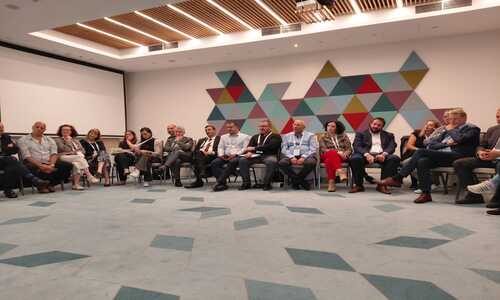
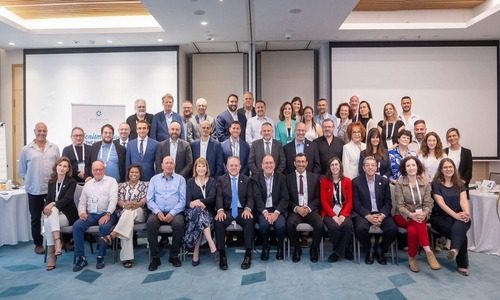
16 experienced psychologists from Kyiv and the region, Kharkiv, Dnipro and the region, Kryvyi Rih, Ternopil, Odesa, etc. took part in the work of the project. Theoretical meetings were held online, practical meetings were held offline.
The groups with which the project participants worked were of different directions, namely:
– Teenagers. The main problems of the group: limited communication, bullying, stress, panic attacks, misunderstandings with parents
– Military servicemen, sappers of various directions.
– Women with children.
3 women live in the border zone (up to 25 km away), 2 live in Kharkiv, 3 are displaced from war zones, but live in Odesa, which is also dangerous; one moved to Ivano-Frankivsk, where there are adaptation difficulties, 1 moved to Kyiv, adapted.
Problems – anxiety, exhaustion, lack of understanding of future prospects, living in unusual conditions, problem of employment, education of children online (problems). One of the women has a 10-year-old child with cancer in remission, one has cancer in remission, one has an older son fighting in the National Guard, another has a civil husband who is also a soldier.
– A group of educators who survived the destruction of the city, endless air alarms. Frequent trigger problem.
– Two groups under the “Children and War” project have a total of 15 teenagers, including IDPs and orphans.
– In groups of teachers, the number of problems is minimal.
– A group of psychologists. Difficulties – not everyone was involved in the work, some participants said that they would like the meetings to last 2 hours.
– 8 female teachers from among IDPs who have been working in our lyceum for the second year. The main problem was emotional burnout due to the increase in workload due to the transition to blended learning and the complex behavior of teenagers.
Group 1. Women affected by military operations, online. The group is stable, the participants are open, and there is a high degree of trust (previous work with them helped). They worked with the development of the emotional sphere, used many practical tools of body-oriented therapy. Work with kindness, activation of internal resources responded.
Group 2. Teenagers aged 11-16 who lost their father in the war (in-person). Main problems: insufficient communication and social skills; high level of anxiety. All the practices suggested by Gila were used. At the end of the third week of work, children who could not show themselves in the group at all expressed themselves. They even tried to show a sense of humor.
– Student group, 11 people, including 3 boys and 9 girls. These are first-year students, future specialists in social work, social teachers. Our meetings were held online. Students were interested in the meetings, as they showed professional interest. At the meetings, we studied techniques for overcoming intrusive memories and finding resources, self-hypnosis, and self-kindness. Technicians worked on themselves. Attention was drawn to emotional burnout, compassion fatigue, STEP, Wonder and You.
Problems of the group – some students noted their emotional swings, sometimes a loss of meaning. There were students who survived the occupation, but coped with it quite well, now they feel confident, which is strengthened by the fact that they became students and left the border
settlement.
– The group consists of women of Jewish nationality, aged 60+, approximately 50% IDPs from Kharkiv, 50% from Poltava, stressful and anxious state, due to events in Israel – there are children and grandchildren, due to events in Ukraine – shelling, separation from home.
– A group of IDPs from the city of Mariupol, a mixed composition of women and men aged 39 to 78. The total number of people in the group is 16, but, taking into account that people work, 6-10 people attended each meeting. The group was formed last year, when the YaMariupol Center was created. I have been working with the group since March 2023.
The main problems for internally displaced people are:
– integration in a new place;
– creation of new social ties and restoration of lost and/or broken ones;
– psychoemotional consequences of received psychological injuries and losses.
Feedback from course participants:
– In your course, I received extremely valuable knowledge that expanded my ideas about self- regulation. This course gave me the opportunity to discover a variety of practices that can be used both for myself and for a group.
Your house technique for returning to the “here and now” was a revelation to me. It helped me focus on the moment and separate myself from stress by being in the present moment. Also, the practice of attention to detail was beneficial for me and the group.
I was very impressed with your approach to the individuality of each person, emphasizing the importance of self-care and support, which are extremely valuable aspects of your course.
The atmosphere you created was based on mutual support and your willingness to share knowledge. Your willingness and style to convey information and ability to create such a positive environment was extremely important to me. Your professional approach and attention to each participant helped to feel important and to find useful knowledg.
Thank you for your dedication, for the energy you put into your classes, and for sharing your experiences with us. It was an incredibly rewarding and inspiring experience for me. I hope to join your next course. Thank you!
– Perfectly. Didactic nature of the course with separate supervision. – Very informative, resourceful, understandable and useful.
– Very good course. There is an opportunity to practice techniques immediately in a group, it was very valuable that your personal well-being comes first.
– Perfectly! Constant involvement in the learning process gives a higher percentage of assimilation.
– I want to say that it was a supportive course for me, since in parallel I led a group in which there was a lot of intrusion, memories, tears. And yes, when I was at a support meeting with Gila and colleagues, I was in balance. Questions were considered very accurately in the group, and there was always a sense of unity, someone’s questions were triggered and we analyzed them in the group – I found an answer, I was heard – I spoke about my pain. We worked in teams, in pairs. Thank you very much for such a valuable support.
– Very timely and very valuable. The course gave an opportunity to recharge, recover, and also helped to create a program for other psychologists! Huge gratitude!
– Many thanks for this course. I really liked the format of simultaneous training and supervision. Group discussions have given me many new techniques for working with teenagers and adults. The warm atmosphere of meetings and new techniques contributed to the removal of emotional stress from professional activities. Each meeting inspired further work and provided new solutions in professional activity.
– Many thanks to the organizers, Mrs. Olena, and the presenter, Mrs. Gili, for such a format. It was a really supportive group for me. And answers to questions and new techniques. Working in the group coincided with my experience of losing a loved one. I personally felt care and support from Gila, which is very valuable for me. I will be grateful if there are still such courses and the opportunity to participate in them.
– This course was added to the treasury of my knowledge, skills and experience. It was necessary and useful to me.
– I really enjoyed the course. I am grateful to the organizers and Gila Petrov for the opportunity to receive highly professional and much-needed supervision meetings for psychologists.
– Huge gratitude to you, Elena and Gila for organizing the work. Each technique is easy to use and effective. I like the form of conducting the course, the opportunity to receive answers to questions that arise at work and quick response to challenges.
Special thanks for the need to lead groups by course participants. I had the opportunity to put into practice all the techniques offered during the training – this is very valuable.
Now I am trying to organize face-to-face support groups in my city, I have already found a place. Thanks for the inspiration.
Participants’ answers to the question: “Do you have a desire to continue your studies in this format: theory, answers, practice. If so, what topics or specific techniques are you most interested in?”
– Yes, we have desire. Didactic character. Work with loss. Psychogenealogy. Moral trauma. New verified studies in Israel.
– Of course, there is a desire. Unfortunately, the war continues and problems are growing both for military women and their children and for civilians – the cry of the soul, fear and powerlessness from the news of friends and relatives.
– There is a desire to learn, the form is very effective. There is a need to provide qualified assistance to veterans and military personnel, widows. Another category is women who were raped by the occupiers.
– Yes, I want to continue my studies. I am interested in working with loss in war (loss of parents for teenagers, loss of brothers and sisters for the military). Also, work with trauma (children – parents).
– Yes, I am interested in this format. Gila’s presentation of the material is impressive. Topics that interest me are the experience of loss by adults and children, their support. If a person has pathological grief, what to do, as well as techniques for flashbacks in the civilian population.
– Yes. I am most interested in working with losses, prevention of burnout, specifics of counseling military personnel and their families.
– I will be happy and grateful for the opportunity to continue my studies. I am interested in everything related to the challenges that arise today and will appear after the end of the active phase of the war: the deepening of the consequences of traumatization, a high level of anxiety, the “delayed life” syndrome, the effect of collective trauma. I am also interested in working with soldiers returning from the war, preparing families for their return.
Continuation of work:
Project participants need to conduct training on the following topics:
1. Irreversible loss in the family, grief.
2. Peculiarities of working with children who have lost relatives.
3. Working with soldiers returning from the war, preparing families for their return. 4. Working with released prisoners, especially women.
Based on the experience already gained in one and a half years (II half of 2022 – 2023), we can say that the program, which was built so that the participants had the opportunity to practice, was the most effective, because the project participants were able to practice the knowledge acquired in real work, and then also ask all the questions that arose in the process of working with groups.